
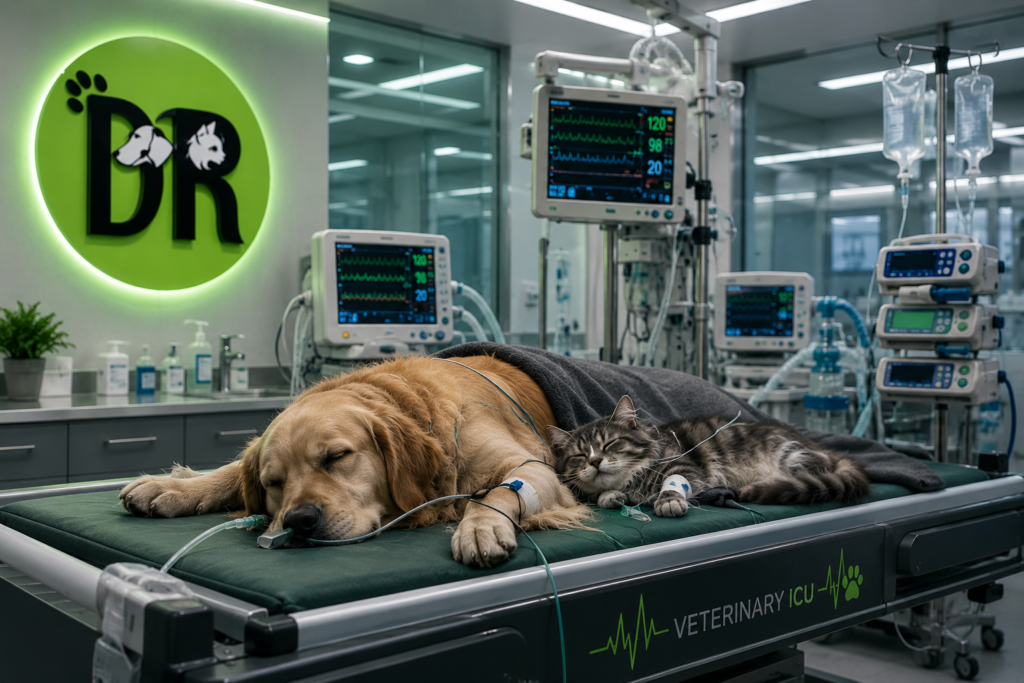
You may hear the term Veterinary Intensive Care Unit (ICU) for the first time when your veterinarian tells you that your pet needs critical care. In that moment, fear and uncertainty can quickly take over: What exactly does this mean? Will my pet recover? What happens inside the ICU?
This guide explains veterinary intensive care in simple, clear language to help you understand what your pet is going through — and how the medical team works to stabilize and support them.
What Is Veterinary Intensive Care (Veterinary ICU)?
A Veterinary Intensive Care Unit (ICU) is a specialized section inside a veterinary hospital designed for critically ill or severely injured animals that require continuous monitoring and advanced medical treatment.
The ICU differs from a regular hospital ward in several important ways:
Continuous Monitoring
The ratio of doctors and nurses to patients is significantly higher, allowing each pet to receive near-constant attention.
Advanced Medical Equipment
ICU patients are connected to monitoring systems that track heart rate, breathing, blood pressure, oxygen levels, and temperature around the clock.
Immediate Intervention
The medical team is prepared to respond within seconds if the patient’s condition suddenly worsens.
Intensive Treatment
ICU care may include IV fluids, oxygen therapy, continuous medications, pain management, and specialized nutritional support.
When Does a Pet Need Intensive Care?
Recovery After Major Surgery
After procedures such as gastric torsion surgery, heart surgery, or large tumor removal, pets often require close monitoring while recovering from anesthesia and to prevent complications.
Acute Organ Failure
Acute Kidney Failure
May require aggressive IV fluid therapy or advanced kidney support.
Liver Failure
Requires close monitoring of blood values and organ function.
Cardiac Emergencies
Pets with severe heart conditions often need continuous heart rhythm monitoring.
Severe Poisoning
When a pet ingests toxic substances, the body may need constant support while the kidneys and liver work to eliminate toxins. ICU care provides that support 24 hours a day.
Severe Respiratory Distress
Animals struggling to breathe may require oxygen therapy or, in extreme cases, assisted ventilation.
Serious Trauma and Accidents
After car accidents, falls, or severe injuries, pets may suffer from internal bleeding or organ damage that requires continuous observation for rapid changes.
Repeated or Severe Seizures
Pets experiencing multiple seizures may require IV medications and close neurological monitoring to prevent additional episodes.
Important Fact: Pets receiving intensive care after major surgeries or severe trauma often have significantly better recovery outcomes compared to standard hospitalization alone.
How the Veterinary ICU Works at Dr Paws
Immediate Assessment and Stabilization
As soon as your pet enters the ICU, the medical team begins a full evaluation, including vital signs, blood tests, and emergency treatment planning.
24/7 Monitoring
Monitoring equipment continuously tracks:
- Heart rate and rhythm
- Breathing rate and oxygen levels
- Blood pressure
- Body temperature
- Blood glucose levels when needed
Individualized Treatment Plans
Every ICU patient receives a customized treatment protocol that may include:
IV Fluid Therapy
To prevent dehydration, maintain blood pressure, and deliver medications.
Oxygen Support
For pets experiencing breathing difficulties or low oxygen levels.
Nutritional Support
Specialized feeding plans, including feeding tubes when necessary.
Pain Management
Carefully designed protocols to keep pets as comfortable as possible.
Communication With Pet Owners
At Dr Paws, we believe pet owners should always stay informed. Families receive regular updates about their pet’s condition and can communicate directly with the medical team whenever needed.
What to Expect While Your Pet Is in Intensive Care
Emotional Stress Is Normal
Having your pet hospitalized in intensive care can feel overwhelming. Many owners describe it as one of the most emotionally difficult experiences they face with their pet. During this time, the ICU team is focused on providing constant medical attention and support.
Visiting Your Pet
In some cases, short visits may be allowed if they will not negatively affect the patient’s condition. The medical team will advise what is safest for your pet.
Recovery and Discharge
A pet is discharged from ICU once vital signs are stable and they can eat, move, and recover safely. Most pets transition to a regular hospital ward before returning home.
Home Care After ICU Discharge
Essential Instructions
- Follow all medication instructions carefully
- Restrict physical activity as advised by your veterinarian
- Monitor surgical sites or catheter areas for redness or swelling
- Provide a quiet, warm recovery environment
- Follow the prescribed diet closely
- Avoid stressful interactions with other pets during early recovery
When to Contact the Vet Immediately After Discharge
- Any worsening of symptoms
- Refusal to eat or drink for more than 12 hours
- Swelling, redness, or discharge around surgery sites
- Return of seizures or emergency symptoms
Why Intensive Care Is Essential — Not Optional
Some pet owners wonder whether intensive care is truly necessary. In critical cases, the answer is absolutely yes.
Medical emergencies can deteriorate rapidly, and even a few minutes may make a major difference. Intensive care does more than provide treatment — it allows the medical team to detect and respond to complications before they become life-threatening.
That early intervention often makes the difference between full recovery and long-term complications.
Dr Paws provides a fully equipped Veterinary Intensive Care Unit in New Giza, offering continuous monitoring and emergency intervention 24 hours a day.
Conclusion
When a pet becomes critically ill or injured, intensive care can provide the constant monitoring and immediate treatment needed to save their life. Early intervention, advanced medical support, and continuous observation all play a major role in improving recovery outcomes.
If your pet requires emergency monitoring or advanced critical care, Dr Paws New Giza is equipped with a fully staffed veterinary ICU operating 24 hours a day, 7 days a week.
When every second matters, our critical care team is here to help your pet recover safely and comfortably.
Frequently Asked Questions About Veterinary ICU Care
How Long Does a Pet Stay in Intensive Care?
The duration depends entirely on the condition. Some pets stay for 24–48 hours, while others may require a week or longer. The medical team evaluates progress daily to determine the appropriate length of stay.
Can I Stay With My Pet in the ICU?
Usually no, because family presence may increase stress or interfere with treatment. However, our team maintains regular communication so you remain fully informed about your pet’s condition.
How Much Does Veterinary Intensive Care Cost?
Costs vary depending on the condition, length of hospitalization, and treatments required. At Dr Paws, we believe in complete transparency and provide clear estimates along with updates if treatment needs change.